
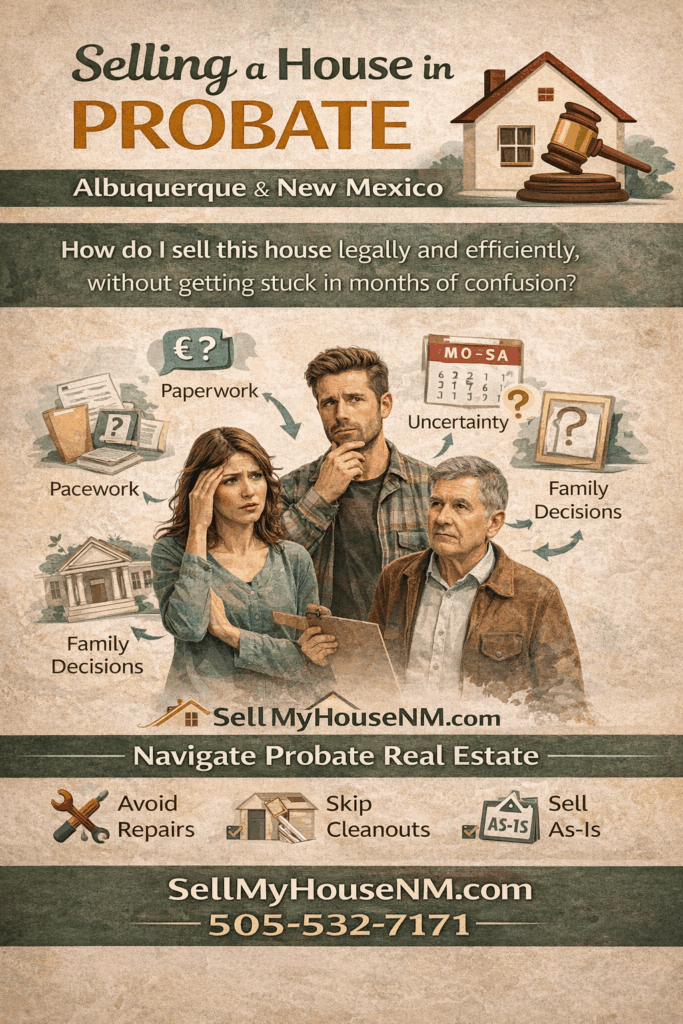
The real question when you have a probate property is:
How do I sell this house legally and efficiently, without getting stuck in months of confusion?
If you are searching phrases like selling a house in probate New Mexico, probate house sale Albuquerque, sell inherited house NM, or how to sell a probate property, this guide is built to give you a clear path forward.
What Is Probate in New Mexico?
Probate is the process that gives someone the legal authority to handle a deceased person’s affairs, including real estate. That person is commonly called the Personal Representative (sometimes referred to as an executor).
Probate is often needed when a home is titled in the deceased person’s name alone, or when ownership does not automatically transfer to someone else.
Informal vs. Formal Probate (How It Affects a Home Sale)
In New Mexico, many probate cases are handled as informal proceedings when the situation is straightforward, uncontested, and the right person can be appointed without disputes.
A case can become formal (or require more court involvement) when there is a conflict, missing documents, unclear heirs, or other issues that make the situation non-routine.
The takeaway for homeowners and heirs is simple:
The clearer the authority and paperwork, the faster and easier the home sale tends to be.
Whether a person died with a will assigning their assets to one or more beneficiaries, or passed away intestate (without a will), their assets immediately become the responsibility of the executor of their estate or the Court. There are two types of probate: formal and informal. With an informal probate sale process, there is limited court involvement when the estate has an original will or there is no dispute regarding the identity of the Heir(s). This article addresses the trickier process of the formal probate process, which can occur when the estate owes a large amount of debt, the will is contested, or the deceased left a will, but the original will cannot be located. In these cases, the Court must become involved.
Can a House Be Sold While in Probate?
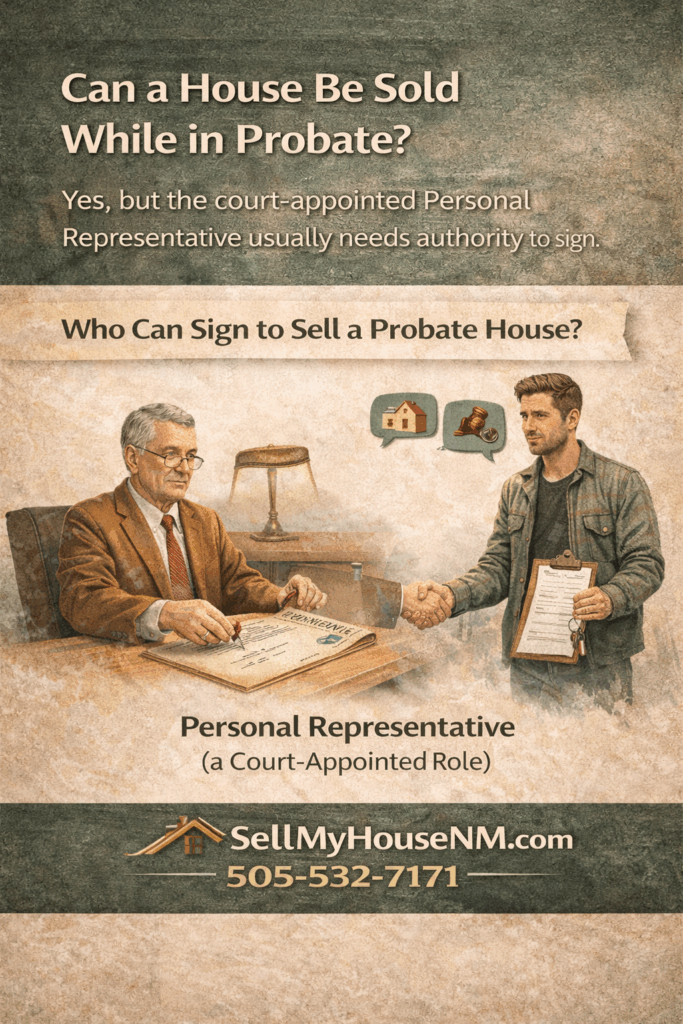
Can a House Be Sold While in Probate?
Yes. A probate property can often be sold, but the right person must have the authority to sign.
In most cases, that means the court-appointed Personal Representative is the one who can sell the home or convey the property as part of the estate process. If no one has been appointed yet, the sale usually cannot be finalized until the appointment is complete.
Why would an estate sell a probate house?
Probate sales happen for practical reasons, such as:
simplifying the estate settlement process
paying off the debts of the estate
stopping ongoing costs (taxes, utilities, insurance, maintenance)
avoiding vacancy problems and property deterioration
distributing proceeds fairly among heirs
What Does It Take to Sell a House in NM While in Probate?
Selling a probate property in Albuquerque (or anywhere in New Mexico) is usually less about “selling tactics” and more about getting the process and paperwork handled the right way.
Here is what typically matters most:
1) Keeping the property protected
Vacant houses can create problems fast. Even simple steps, such as basic maintenance, secure entry points, and handling utilities appropriately, can protect value while probate is underway.
2) Getting clarity on who can sign
Families lose time when everyone assumes someone else is “in charge.” The cleanest path is identifying who will serve as Personal Representative and what is needed to establish that authority.
3) Knowing whether the estate needs the sale
Sometimes the home is sold to pay debts, resolve liens, or eliminate financial bleeding. Other times, the heirs simply do not want the home and prefer a clean sale with minimal stress.
4) Choosing the right sale route for the condition
If the home is in good shape and you have time, listing may make sense. If the home needs repairs, is full of belongings, or you want speed, an as-is direct sale can be the better fit.
Common Albuquerque scenario: An inherited home needs repairs and has ongoing costs, and the heirs live out of state or do not want the burden. In that case, a direct sale often removes the cleanout, repairs, staging, and showing process.
An executor’s main responsibility is to preserve the estate’s assets for distribution to any Heirs or beneficiaries, as outlined in the will. Sometimes a situation might occur where the estate owes a large amount of debt to creditors or the property has been neglected and back taxes are owed to the government. In this situation, the executor of the estate, the administrator, or the Court is allowed to sell the property to settle all debts, even if there are Heirs.
A good example of this is an elderly woman who passes away with an executor for her estate to manage her affairs. She has two Heirs. By the time she dies, she has racked up both hospital and credit card debt to the amount of $90,000. She leaves a home worth $150,000, but no cash assets, and owes $80,000 to the hospital and $10,000 in credit card debt. Despite having passed, the estate still must find a way to pay off these debts. If the Heirs are unable to cover the debt themselves, the executor will need to sell the property to pay off the $90,000 of debt. Once the house is sold, the remaining $60,000 would be divided between the two Heirs.
A property in probate may also be sold if the person died with no will and there are no immediate Heirs. In this situation, the Courts can order the sale of the property and distribute any profits to the closest relatives.
Steps for Selling a House in Probate
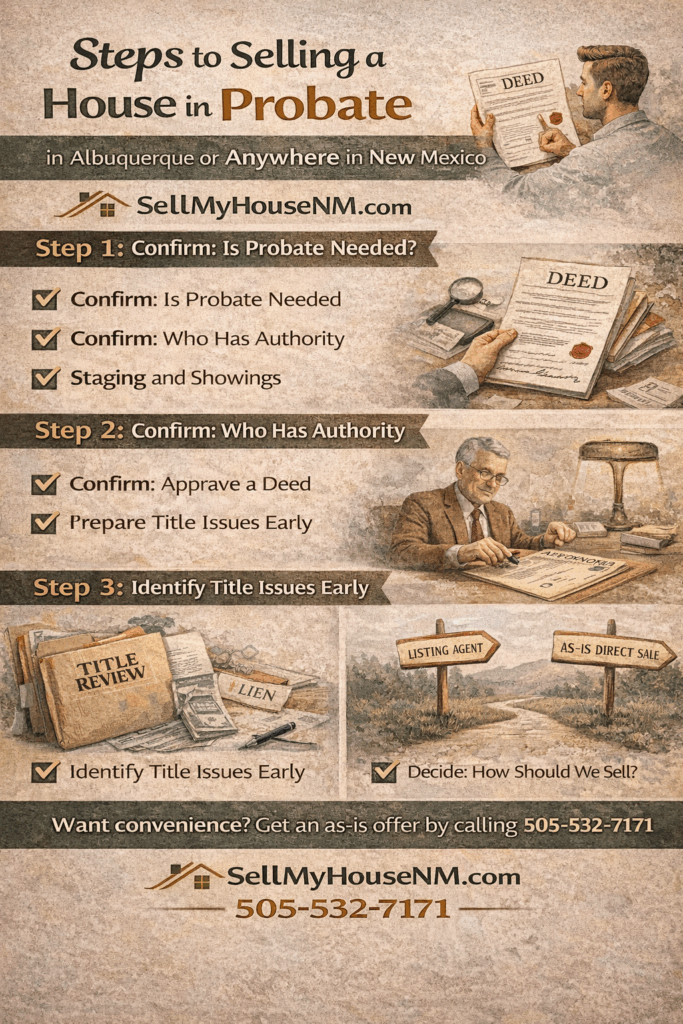
If you own a property in New Mexico that is stuck in probate and you’re struggling to find a way to sell, there is hope! Depending on local and state laws, the process of selling a probate property can be completed in four steps. The first step is having an executor or administrator assigned, if there wasn’t one already assigned by the deceased.
If you are assigned as the executor (or you and the executor are in agreement on how to continue), you now have the ability to decide whether to sell the property or keep it. Whether the estate owes money to creditors or you inherited a house in another state that doesn’t make sense to keep, you can decide to sell that property and walk away. But before you put up that For Sale sign, you’ll need to have the property appraised. Once that is complete, only then can you petition the Court so that you can list the property for sale on your own (FSBO) with a trusted realtor who has experience with probate properties, or sell it directly to an investor.
Decide How to Sell Your Probate Property:

Valuation or Appraisal
Before you accept any offer, it helps to understand the home’s value in two different ways:
- As-is value (what it is worth in its current condition)
- Retail value (what it might be worth after repairs and full prep)
This is especially important in probate because you are making decisions that affect heirs and estate outcomes. A realistic valuation helps you avoid underpricing, overpricing, or choosing the wrong sale path for the home’s condition.

Listing the House
If you list a probate property traditionally, expect the standard “retail” requirements:
- cleanup, photos, showings, and buyer questions
- inspections and appraisal requirements
- repair requests after inspection
- buyer financing timelines that can shift
Listing can be a good option if the house is already in strong condition and you’re willing to pay repairs, fixes & commission.
If the home needs work or the estate wants speed, you can also sell directly without listing.

Offers
When offers come in, focus on more than just the headline number.
Compare offers based on:
- how quickly the buyer can close
- whether they are using cash or financing
- what contingencies they have (inspection, appraisal, loan approval)
- how much uncertainty the estate is taking on
- the expected “net” after costs and concessions
Probate sales are often smoother when the buyer is experienced, responsive, and not constantly changing terms as the timeline goes on.

Proposed Action
Probate real estate is not only about signing a contract. It is about clean title and correct recording.
This is where many families get stuck, especially when:
- the probate is opened in one county but the property is located in another county
- there are old liens, missing releases, or unclear ownership records
- the correct deed needs to be prepared and recorded properly
A title company and probate attorney are often key partners here because the paperwork needs to be handled correctly for the transfer or sale to be valid and insurable.

Bidding
In practice, “bidding” often just means you may receive multiple interested buyers, especially if the property is priced attractively or located in a high-demand part of Albuquerque, Rio Rancho, Santa Fe, or surrounding areas.
If buyers compete, the estate’s goal should be:
- choose the offer that matches the estate’s priorities
- avoid offers that sound high but are filled with conditions
- confirm the buyer can actually perform
A “clean” offer with fewer moving parts often beats a higher offer that falls apart halfway through.
Most offers have contingencies, and each one is a potential for the offer to fall through.

Finalization of Sale
Once you accept an offer and the estate has the authority and paperwork in order, the closing process typically includes:
- title search and clearing title issues
- signing the correct conveyance documents
- paying off approved debts or liens through closing
- distributing proceeds according to the estate plan and requirements
When done right, closing a probate sale can be straightforward. The key is starting the title and probate coordination early, rather than waiting until the last week.
Most companies do not offer probate help. That is where we excel. We have decades of experience handling probate sales and the issues that come with.
Who Buys Houses in Probate?
Probate homes can be purchased by many buyer types, including:
- retail buyers (often prefer homes in good condition and even still, ask for repairs)
- investors (often buy properties that need repairs or cleanouts, but often lack experience)
- cash buyers (often prioritize speed and certainty, but don’t offer help with the probate process)
Probate properties that need work are frequently a better fit for buyers who are comfortable purchasing as-is, and understand the idiocincricies of the probate process.
We buy probate houses in New Mexico
At SellMyHouseNM.com, we buy probate houses for cash in Albuquerque, Santa Fe, Rio Rancho, and statewide.
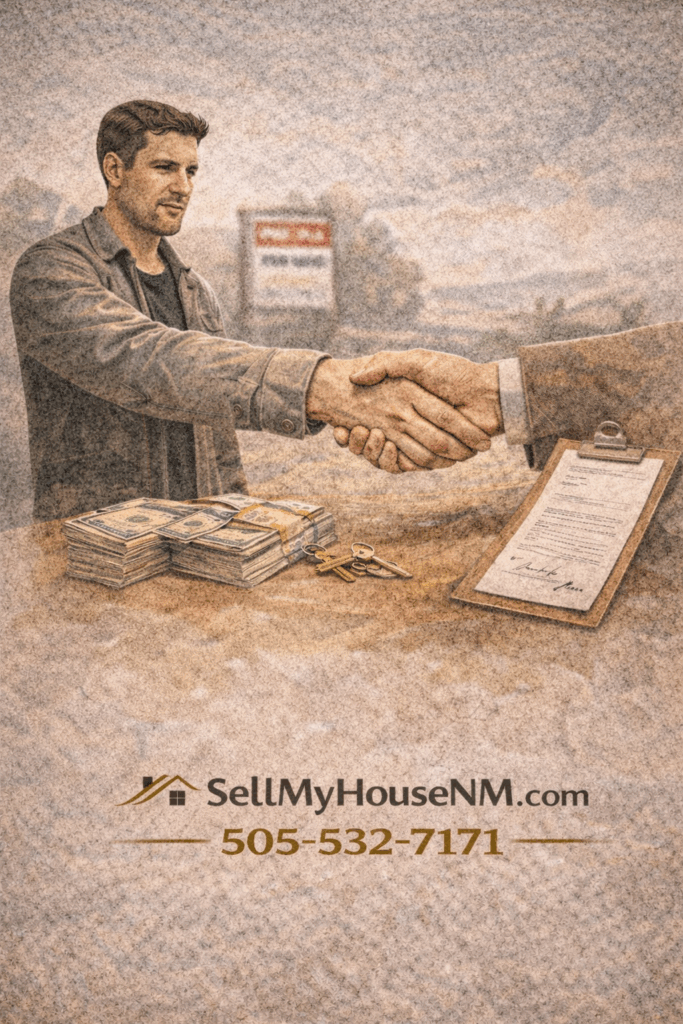
If you want speed and simplicity, we can help you avoid repairs, cleanup, and showings.
We also provide and pay for a transaction manager who helps coordinate the title work and probate-related logistics needed to close for every transaction. This is a convenience service and not legal advice, but has saved sellers thousands of dollars in most cases.
Call 505-532-7171 or use the form below to start.
Get A Cash Offer Today. You Choose The Sale Date…
Avoid These Common Mistakes When Selling a Probate Property
Moving Too Quickly
When selling a probate property,
moving fast is good,
but moving fast without the right foundation is not.
Common probate mistakes made that mean you may be moving “too fast” include:
- signing agreements before the Personal Representative authority is clear
- picking a buyer without confirming they can perform
- accepting an offer without understanding as-is value vs retail value
- Speed is valuable, but clarity protects the estate.
Not Completing a Real Estate Disclosure
Disclosures can create stress in probate because heirs often did not live in the property.
The safest approach is:
- disclose what you actually know
- avoid guessing or making assumptions
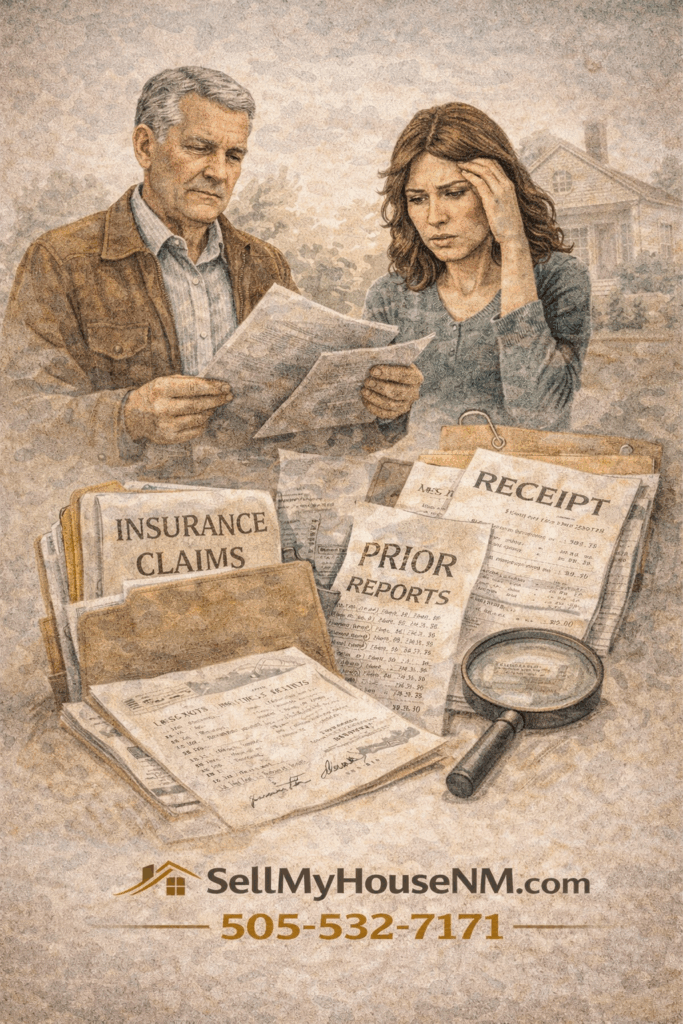
- use documentation if you have it (receipts, prior reports, insurance claims)
- lean on experienced professionals when unsure
A clean and honest disclosure approach reduces risk and prevents last-minute deal friction.
Most states, including New Mexico, require sellers and their agents to disclose in writing “material defects” about the home in traditional real estate sales. According to the National Association of Certified Home Inspectors, material defects are defined as “…a specific issue with a system or component of a residential property that may have a significant, adverse impact on the value of the property, or that poses an unreasonable risk to people. The fact that a system or component is near, at or beyond the end of its normal useful life is not, in itself, a material defect.”
Some experienced real estate agents are great at navigating these tricky waters, but what if you inherited a house that you never lived in? How would you know what to disclose? All New Mexico real estate agents are prohibited from assisting you with filling out the disclosure form or recommending what to write. Most executors are not knowledgable in the properties current condition so put minimal information on the disclosure. However, this can often raise red flags for traditional buyers since they are not inheriting information about the property they are purchasing. This is because most executors do not and did not live in the property recently, so would have no way of knowing what the current condition and defects are to disclose. The benefit of a cash offer from a knowledgable “we buy houses” company can be avoiding the disclosures and recourse for unknown issues found after the close of escrow.
Failing to Hire a Lawyer
Probate real estate can involve court authority, deed preparation, and technical title steps.
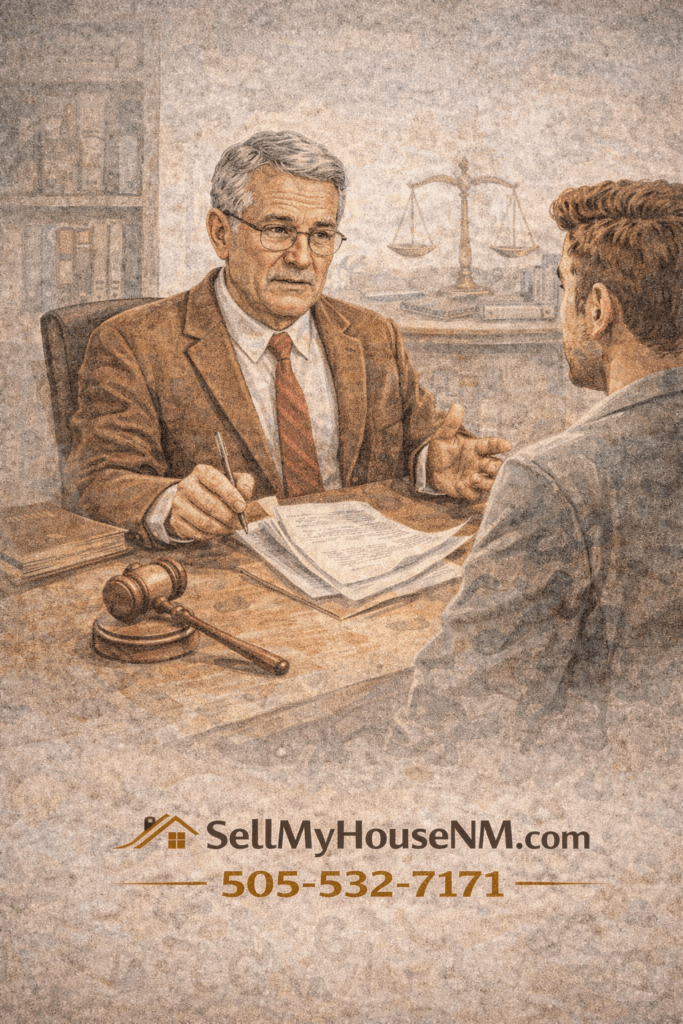
Even if you do not retain an attorney for the entire process, a short consultation with a New Mexico probate attorney can prevent major mistakes and delays. Deed drafting and probate filings are not the place to “wing it.”
SellMyHouseNM.com offers full service help, from recommending an experienced and affordable attorney, to communicating what is needed to ensure things flow seamlessly. This is a huge help for anyone who isn’t completely familiar with the process. Learning as you go when selling an inherited home can lead to costly lawyer bills and issues during the closing process.
Waiting Too Long to Start the Probate Process
Many families wait because grief is real, travel is hard, and paperwork is intimidating.
Probate can be an ardous process when done alone, while dealing with a plethora of additional logistics after losing a loved one.
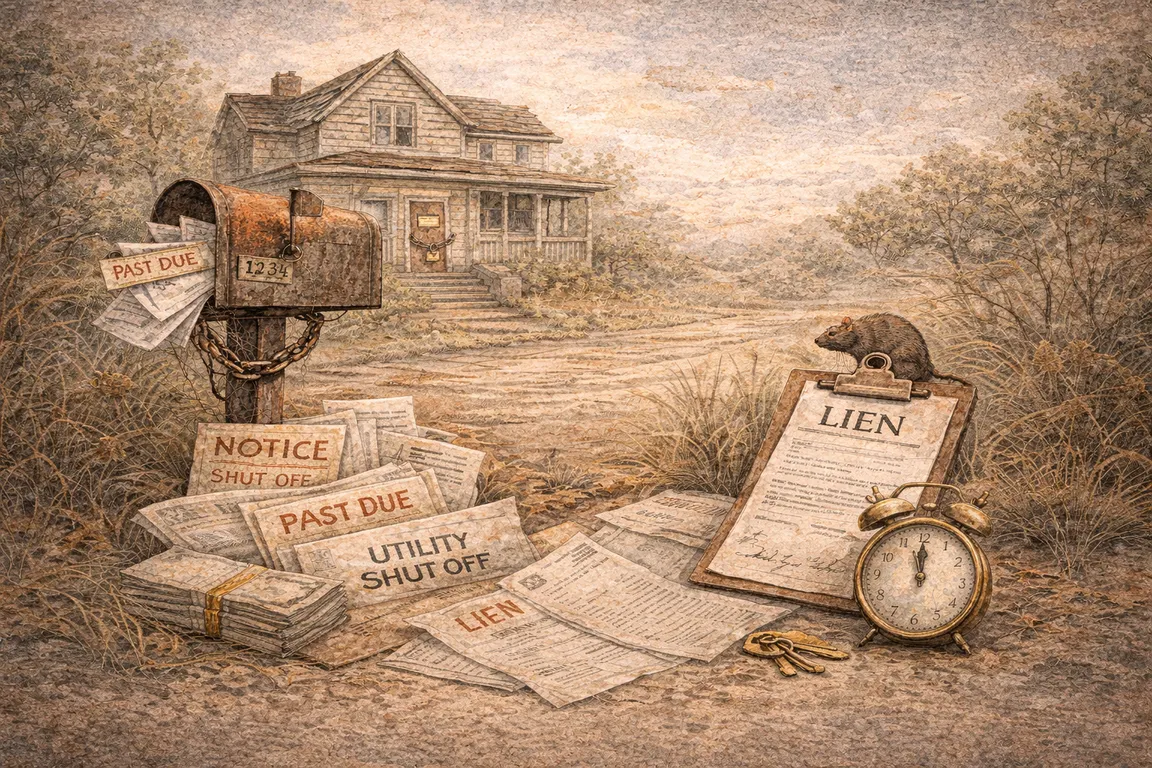
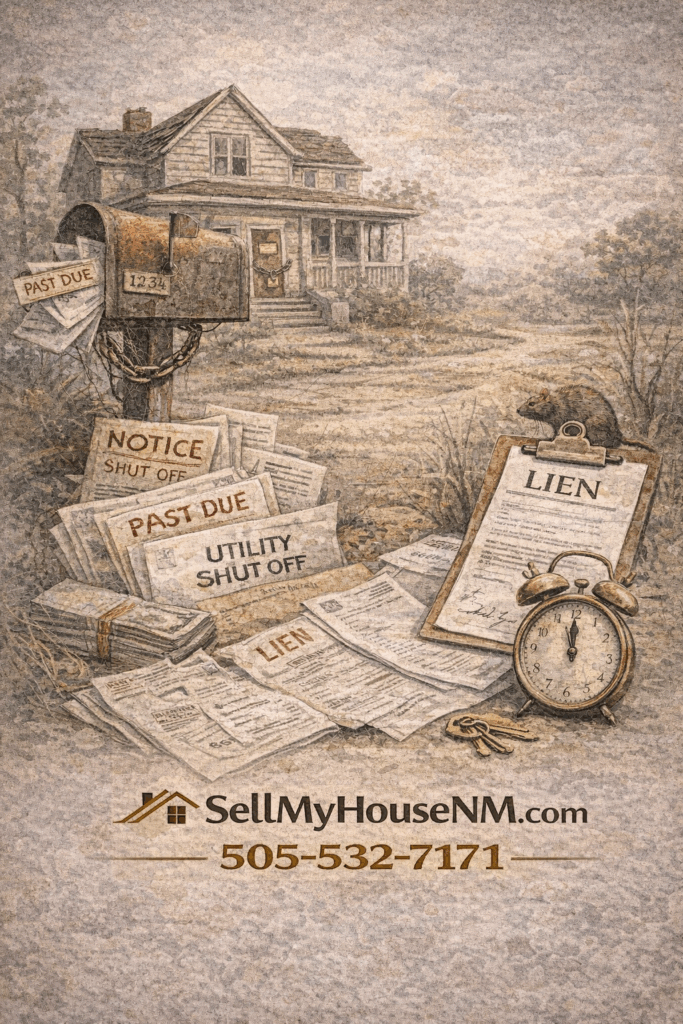
But while you wait, the property can keep accumulating costs and risks:
- property taxes and insurance
- utilities and maintenance
- vacancy issues
- deterioration
- squatters
- liens
- title complications getting worse over time
- Penalties accumulating with compounding interest
If the estate is leaning toward selling, starting early usually creates the smoothest outcome.
Need to Sell a Probate House in New Mexico?
If you are dealing with a probate property in Albuquerque or anywhere in New Mexico and want a clear, simple path forward: Call 505-532-7171 or submit the form below.
We buy houses as-is, and we help families avoid the traditional listing process when speed and convenience matter most.